Diplomacy does not need less power.It needs more awareness.
Conscious Diplomacy is a framework that adds awareness to the core of diplomatic practice without removing protocol, negotiation, interests, power, or representation.
It asks not only:
What do I say?
BUT ALSO:
How do I show up?
What do I see?
What do I not see?
How do I influence?
And what remains after I get the result?
- 01Presence
- 02Perception
- 03Composure
- 04Expression
- 05Negotiation
- 06Representation
- 07Integrity
Presence
The quality and intentionality of how you enter a space.
Perception
Reading people, systems and dynamics beneath the surface.
Composure
Holding steadiness under pressure and complexity.
Expression
Communicating with precision, without sacrificing depth.
Negotiation
The art of reaching agreements that hold.
Representation
How you carry authority and embody what you stand for.
Integrity
The alignment between what you claim and what you do.
Presence
Presence influences perception.
Perception
Perception affects composure.
Composure
Composure shapes expression.
Expression
Expression enters negotiation.
Negotiation
Negotiation affects representation.
Representation
Representation requires integrity.
Integrity
UNDERSTOOD.
EXERCISED CONSCIOUSLY.
SEEN MORE COMPLETELY.
Where does this matter?
NEGOTIATION
Where interests, pressure and perception meet.
REPRESENTATION
How one carries not only a message but a role.
LEADERSHIP
How presence affects the room before language begins.
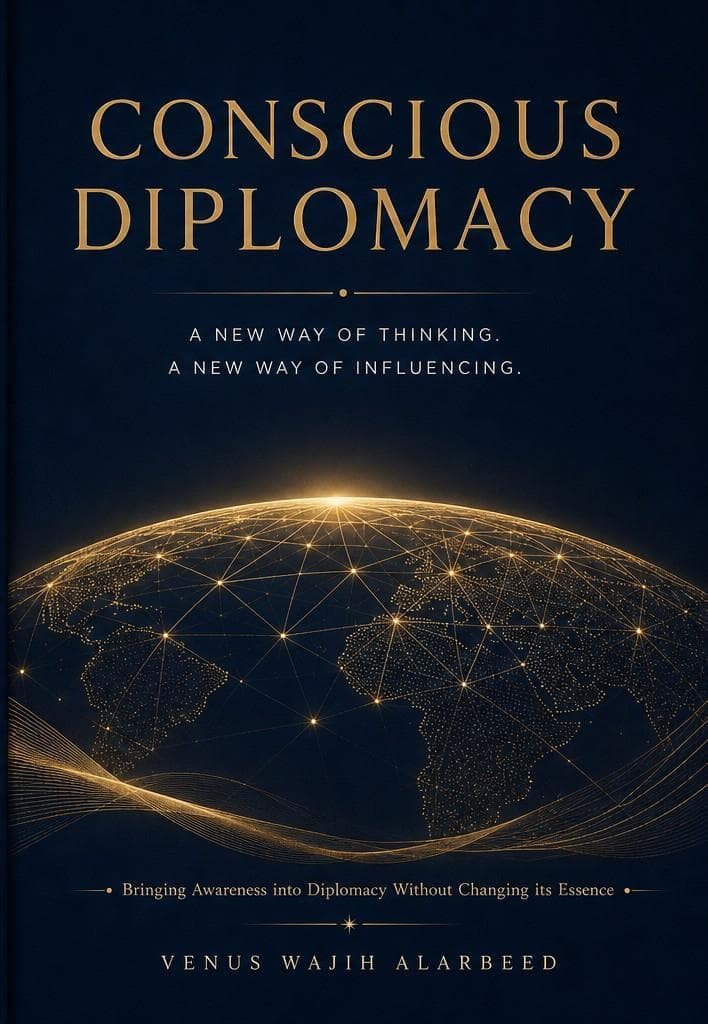
Conscious Diplomacy
This book examines the human being inside the diplomatic room. Not a collection of rules. Not awareness as a separate idea. But the practitioner — how they show up, how they read, how they use power, how they negotiate, how they represent, and what they leave behind.
THE FRAMEWORK ENDS HERE.
THE JOURNEY CONTINUES.
A journey that begins in the diplomatic room — but does not end there.